
“Stonewall, Systemic Neglect, and the Fight for True Advocacy….”

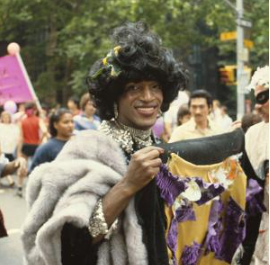
Before we can talk about the future, we must acknowledge the foundation. This is the legendary Marsha P. Johnson—a Black trans woman, revolutionary activist, and drag queen who was a central figure in the 1969 Stonewall Uprising. She did not fight back for a 'procedural buzzword' or a title; she fought for the fundamental right to exist. When modern institutions fail to provide basic care for the LGBTQI+ community, they are failing the legacy that Marsha built with her blood and resilience. We all stand on her shoulders.
Introduction: Why History Matters Today
When we look back at the origins of modern queer liberation, the public narrative often sanitizes the struggle into polite buzzwords. But the reality of Stonewall was never about corporate inclusion or administrative comfort—it was about raw survival. Today, that speech delivered to hold leadership accountable.
Part I: Key Historical & Conceptual Context
Before addressing the committee, it helps to ground the narrative in actual history:
What Stonewall Is: The Stonewall Inn was a gay bar in Greenwich Village, New York City. In June 1969, homosexual acts were illegal in almost every state, and police routinely raided gay establishments, subjecting patrons to harassment, arrest, and public exposure.
What Happened: In the early hours of June 28, 1969, patrons at Stonewall fought back against a police raid instead of dispersing. The resulting uprising lasted several nights and marked the transition from underground self-preservation to organized, vocal liberation.
"Who Threw the First Stone?": Historians document that no single individual started the riot; it was a collective flashpoint driven by marginalized LGBTQ+ youth, trans women of color, and drag queens. Key figures include Marsha P. Johnson, Sylvia Rivera, and Stormé DeLarverie.
The Mission: The core mission was basic human survival, bodily autonomy, and freedom from state-sanctioned harassment and criminalization.
Advocacy vs. Performative Words: In behavioral health, terms like "advocacy" or "inclusion" are often used as procedural buzzwords. Genuine advocacy requires understanding that LGBTQ+ health disparities stem directly from systemic exclusion and historical persecution.

Part II: San Francisco Roots: The Women Who Taught Me Survival
This is my beautiful friend, Bionka Simone of SF. More than a friend, she was my mother for so many years in the streets of San Francisco that transformed me into the person I am today. The incomparable, the unwavering, the inspirational, the beautiful Bionka Simone of SF.
I lived in San Francisco for all of my 20s—the biggest chunk of my life, from 18 till 31. Back then, the majority of my friends were performers, mostly trans women, who taught me the real stories behind things.
This as long before facial feminization surgeries were covered by Medi-Cal, or before hormones were covered at all. When the girls had to go and do sex work to cover their hormones, it wasn't only out of financial necessity; it was also a rite of passage in the community to prove how much you wanted it.
Things have gotten really sterilized in the past couple of years. While it's a good thing that people don't have to go through the exact struggles that those who came up before them faced, there needs to be some awareness of the sacrifices people made—not just at Stonewall decades ago, but right here in our lifetime—to give people the room and space to be who they are.
The women I knew showed me a strength that wasn't soft. It was gritty, it was harsh, it was part of the culture, and it was earned respect. People like my friends Bianca, Bambi, and Blair—just to name a few—were huge, influential figures in shaping the person I am now. They taught me about community and how to live as a role model. They are some of the most genuinely feminine and the best women I've ever met in my life.

DATE: August 27, 2026
SUBJECT: Official Statement on Systemic Behavioral Health Neglect, Coercive Administrative Practices, and Institutional Failure
I. Purpose of Submission
Please accept this document as formal written testimony to be entered into the official public record of today's meeting, accompanying my oral public comment. This submission serves as formal notice to the Board regarding ongoing, systemic failures within funded behavioral health programs, the improper use of administrative authority, and the grave real-world impact of institutional apathy on vulnerable community members.
II. The Reality of Institutional "Care" vs. Systemic Coercion
The public narrative surrounding behavioral health services frequently relies on terminology such as advocacy, inclusion, and trauma-informed care. However, administrative credentials and executive titles have increasingly severed ties from the actual work of protecting vulnerable human beings.
Coercion vs. Assistance: There is a distinct boundary between genuine support and transactional administrative control. Utilizing funds or program maneuvers to obscure institutional oversights rather than address client stabilization does not constitute aid—it constitutes coercion
Retaliatory Labeling: When vulnerable individuals challenge non-compliance, administrative errors, or systemic neglect, the institutional response is routinely to label the client as "difficult" or "unappreciative."
Dereliction of Basic Duty: Professionals operating within behavioral health and supportive housing retain a permanent duty of care. Failing to maintain basic operational awareness and person-centered communication directly jeopardizes human lives.
III. Human Impact and High-Risk Exposure
...support for LGBTQI+ and trans individuals, community members are forced into dangerous survival situations simply to maintain basic existence. Withholding mandated emergency aid and ignoring explicit warnings transforms administrative inaction into direct institutional harm.
IV. Formal Demands for Commission Action
As the oversight body tasked with reviewing behavioral health operations, policies, and community impacts, this Board is formally requested to initiate the following action
Systemic Compliance Audit: Order an independent review of funded supportive housing providers focusing on data integrity, grant allocation usage, client grievance processing, and non-discrimination mandates.
Investigation of Emergency Stabilization Protocols: Review current policies regarding client requests for emergency stabilization funds to ensure resources are actively used for client stabilization rather than covering administrative errors.
Enforcement of Person-Centered Standards: Implement strict oversight mechanisms to ensure providers adhere to person-centered communication and mandatory accommodation standards for individuals with documented clinical needs.
V. Conclusion
Behavioral health services hold human lives in trust. When executive leadership loses sight of the weight carried by their decisions, the consequences are severe and irreversible. I request that this document be distributed to all Board members and permanently retained within the official minutes.
Respectfully submitted
Speech
I stand here today because they stood before me. This photo is a reflection of a hard-won lineage. At the top of this post is Marsha P. Johnson, who fought for the fundamental right for people like me to exist at all. In the middle is my mentor and mother in the streets, Bianca Simone, who taught me the gritty reality of that survival and earned respect in San Francisco. Because of them, I don't have to survive in the same way—instead, I have the space to stand in a boardroom and demand that institutions deliver on the care they promise. My fight is a continuation of theirs.
Good afternoon
At Stonewall in 1969, queer and trans people didn't fight back to start a buzzword... they fought for survival. Today, we hear words like advocacy and inclusion thrown around... but true advocacy is not just a title.
I used to look up to the leaders in this field. I believed that reaching an executive role meant you were deeply connected to the real work of protecting vulnerable people. But I forever. I do not understand how executives in behavioral health can lack that same basic awareness.
When I challenge this system, I am often labeled as difficult. But I know the difference between genuine support and coercion. Using resources to cover up institutional mistakes... is not help.
Real advocacy is happening outside these walls. It is the advocate who committed to fighting alongside me for years. It is the woman I spoke with this week who went out of her way to connect me with actual support.
She did it because she has an LGBTQI child... and the harassment they faced got so bad that she almost lost them. She knows the stakes. In a system where everyone else was flippant, she chose to see me as a person. After losing my own mother... she looked at me and saw someone's kid. She told me not to give up, and I won't.
Behavioral health is not a popularity contest.
You hold vulnerable lives in your hands. When you forget the permanent weight of your words and actions... people die. It is time to remember what you are actually here to do.
Formal Request for Investigation - Identity Misalignment, Gender Identity Discrimination, Continuity-of-Care Failures, and Program Violations (2023-2026)